You have a gap where a tooth used to be, and you’re trying to figure out what to do about it without getting pushed into the most expensive option in the room.
Maybe the tooth was pulled. Maybe it’s in the back and nobody sees it, so you’ve been telling yourself it can wait. Maybe you just want to know, in plain terms, what your real choices are and what each one costs before you sit in a chair.
That’s a reasonable thing to want, and it’s exactly how we think you should approach this. At SiRa Dentistry in Spotswood, Dr. Peter Mikhail and Dr. Michael Massoud would rather walk you through the honest tradeoffs than talk you into anything. If you want your questions answered directly, call (732) 454-7472.
Why Replacing a Missing Tooth Actually Matters
A gap rarely stays “just a gap.” Here’s what tends to happen when a missing tooth is left alone:
Neighboring teeth drift. The teeth on either side start leaning toward the empty space, and the tooth above or below it can grow longer than it should. That shift can create bite problems and make future treatment harder.
Your bite changes. As teeth move, the way your upper and lower teeth meet changes too, which can load certain teeth and your jaw unevenly.
Bone can shrink. When a tooth root is gone, the jawbone in that spot has nothing stimulating it, so over time it can start to recede.
Confidence takes a hit. A visible gap, or the way it changes how you chew and speak, wears on people more than they expect.
None of this happens overnight. But it’s the reason “leave it alone” often costs you more later, not less.
Now to the real question: how do you fill it.
Option 1: The Dental Bridge
A dental bridge is a set of connected crowns. The teeth on either side of the gap are shaped down and capped, and a false tooth (the “pontic”) sits between them to fill the space. It’s fixed in place, so it doesn’t come out.
Bridges are a standard, well-proven treatment, and they’re something we do here.
Pros: Fixed and stable. No surgery. Usually completed in a couple of visits over a few weeks. A strong choice when the neighboring teeth already need crowns anyway.
Cons: It requires grinding down the two healthy teeth beside the gap to anchor it. It doesn’t stop bone loss under the missing tooth. Bridges typically last around 10 to 15 years before needing replacement.
Rough timeline: Often 2 to 3 weeks, across two visits.
Rough cost: Moderate, and less than an implant upfront in most cases. Your real number depends on materials and your specific mouth, which we cover at your consult.
Option 2: The Dental Implant
An implant replaces the tooth root itself. A small titanium post is placed into the jawbone, and once it fuses with the bone over a few months, a crown is attached on top. Because it stands on its own, it doesn’t rely on the neighboring teeth.
Implants are worth understanding as an option because they’re the only one of the three that replaces the root, which is what preserves the bone. Placing an implant is a surgical procedure, and we place them here. That matters more than it sounds like it should, because it means the person who plans your treatment is the person who does it, and you aren’t handed off mid-process to a practice that has never met you.
Pros: Closest feel and function to a natural tooth. Preserves the jawbone. Doesn’t require altering the healthy teeth next to it. Often lasts decades with good care.
Cons: Highest upfront cost. Longest timeline, because the post needs months to fuse. Requires a surgical procedure and enough healthy bone (or grafting to build it).
Rough timeline: Several months, start to finish, including healing.
Rough cost: Higher upfront than a bridge or partial. Real numbers vary widely based on whether extraction, grafting, or other groundwork is needed, which is why a consult matters.
Option 3: The Partial Denture
A partial denture is a removable replacement. The false tooth or teeth sit on a gum-colored base that clasps onto your remaining natural teeth, and you take it out to clean it.
Partials are a standard option and something we can provide.
Pros: Lowest upfront cost. No surgery, and no grinding down of neighboring teeth. Can replace several missing teeth at once. Often the practical answer when budget or bone rules out an implant right now.
Cons: Removable, so it can shift while you eat or speak until you adjust to it. Doesn’t stop bone loss. Usually needs relining or replacing over time as your mouth changes.
Rough timeline: Several weeks of fittings.
Rough cost: Lowest upfront of the three. Your exact number depends on the design and number of teeth.
Missing Tooth Options at a Glance
| Option | How it works | Pros | Cons | Best for |
|---|---|---|---|---|
| Dental bridge | Crowns on the two neighboring teeth anchor a false tooth between them | Fixed, no surgery, done in a few weeks | Grinds down healthy teeth, does not stop bone loss, about 10 to 15 years | People whose neighboring teeth already need crowns |
| Dental implant | Titanium post replaces the root, crown attached after it fuses | Feels closest to natural, preserves bone, does not touch other teeth | Highest upfront cost, months-long timeline, surgical, needs healthy bone | People wanting the longest-term solution who have the bone and budget |
| Partial denture | Removable false tooth on a base that clasps onto existing teeth | Lowest cost, no surgery, replaces several teeth | Removable and can shift, does not stop bone loss, needs relining | People needing an affordable option now, or replacing multiple teeth |
Scroll sideways to see the full table on a phone.
How to Choose the Right Option for You
There’s no universally “right” answer here. There’s the right answer for your mouth, your bone, and your budget. A few honest guideposts:
– If the teeth next to the gap already need crowns, a bridge can be efficient, since you’re treating those teeth either way.
– If you want the longest-term solution and protecting the bone matters to you, an implant is the option built around that, provided you have the bone and the budget.
– If cost is the deciding factor right now, or you’re replacing several teeth, a partial denture can be the practical, sensible starting point.
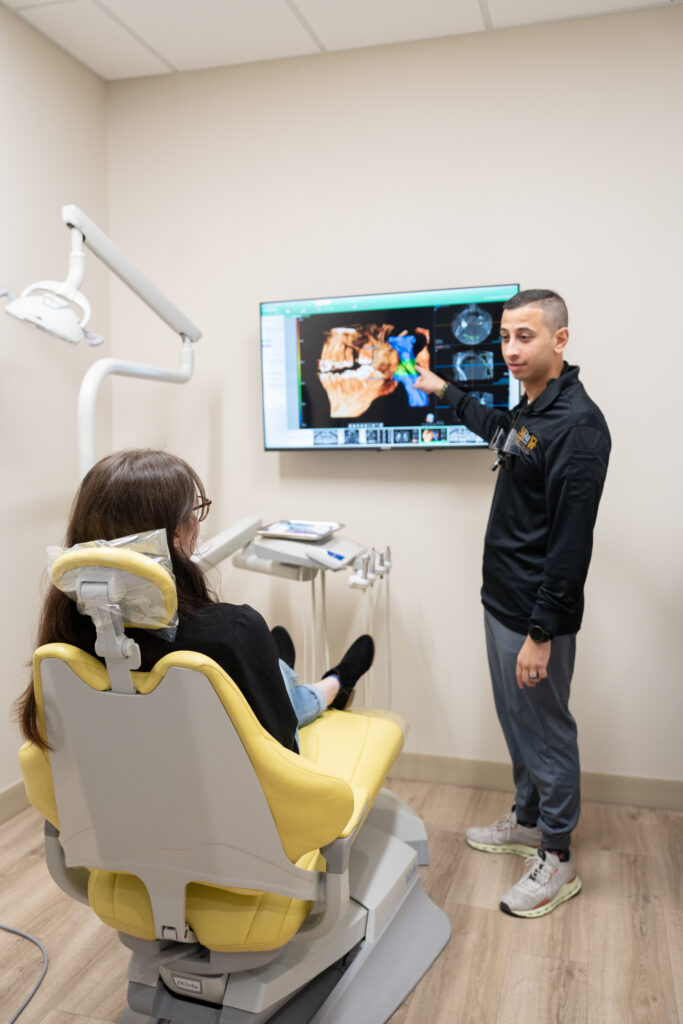
– If you’re not sure, that’s normal. The right move is a consult with a 3D look at your bone and bite, so the recommendation fits your actual situation instead of a generic one.
We’ll walk you through which option fits you, lay out the real numbers, and let you decide without pressure.
Frequently Asked Questions
Which missing tooth option is cheapest?
A partial denture is usually the lowest upfront cost, followed by a bridge, with an implant typically the highest. But “cheapest now” and “best value over time” aren’t always the same thing, which is worth talking through for your case.
Is a bridge or an implant better?
Neither is universally better. A bridge is often faster and less expensive upfront and can make sense when the neighboring teeth need work anyway. An implant preserves bone and doesn’t touch the other teeth, which many people value long term. We’ll help you weigh the two.
How long can I leave a gap before replacing the tooth?
There’s no exact deadline, but the longer a gap sits, the more the neighboring teeth can drift and the more bone can be lost. Addressing it sooner usually keeps your options simpler and less costly.
Does insurance cover replacing a missing tooth?
Coverage varies widely by plan, and plans often treat bridges, partials, and implants differently. We’ll help you understand what your specific plan covers before you commit to anything.
Ready to Fill That Gap the Right Way?
You don’t have to guess which option is right, and you shouldn’t have to fend off a sales pitch to find out. Bring us the gap, and we’ll give you the honest comparison for your mouth, your bone, and your budget.
Wondering which missing tooth option actually fits you? Call SiRa Dentistry at (732) 454-7472 and we’ll walk you through it, no pressure.
Schedule a consultation at SiRa Dentistry or call (732) 454-7472. Dr. Mikhail and Dr. Massoud proudly serve Spotswood, East Brunswick, Monroe Township, Old Bridge, and communities across Central NJ and Middlesex County.
—
SiRa Dentistry is located at 456 Main St, Spotswood, NJ 08884. Simply Radiant Dentistry — because your smile should be exactly that.