Most people blame bad breath on garlic. Or coffee. Or not brushing long enough.
And sometimes that’s exactly what it is.
But if you’re brushing, flossing, using mouthwash, and still worrying about it, you’re probably dealing with something the mints aren’t going to fix. The cause is real, it’s usually treatable, and it almost always has nothing to do with your hygiene habits.
Here are the five causes of persistent bad breath that most people never get told about.
1. Bacteria living below the gumline
This is the most common one, and the most overlooked.
Brushing cleans the surfaces of your teeth. Flossing cleans between them. But neither one reaches below the gumline, where bacteria can quietly build up in the shallow pockets between your teeth and gum tissue.
When that bacteria accumulates, it releases sulfur compounds. Those compounds are what actually cause the smell most people describe as “bad breath that doesn’t go away no matter what I do.”
If you have even mild gum inflammation, gingivitis, or early gum disease, you may have bacterial buildup that your home routine simply can’t reach. A professional cleaning, and sometimes a deeper cleaning called scaling and root planing, is the only way to address it.
The important thing to know: this is not a hygiene failure. Bacteria below the gumline is something that happens to clean, diligent patients too. It’s a structural issue, not a personal one.
2. A dry mouth
Saliva is your mouth’s natural cleaning system.
It rinses food particles, neutralizes acids, and keeps bacterial populations in check. When saliva production drops, bacteria grow faster, and the byproducts of that bacterial activity are what you smell.
Dry mouth has a lot of causes:
– Mouth breathing (especially during sleep)
– Antihistamines, antidepressants, blood pressure medications, and many other common prescriptions
– Dehydration
– Certain medical conditions, including diabetes and autoimmune disorders
– Anxiety and stress
If you wake up with significant bad breath or a stale, dry taste in your mouth, dry mouth is worth discussing at your next dental visit. There are rinses, lozenges, and simple behavioral changes that can help, but first you need to know that’s what you’re dealing with.
3. Something hiding in a back tooth
A cavity, a cracked tooth, a failing old filling, a broken crown.
Any of these can create a space where food particles get trapped and bacteria thrive. The smell can be hard to pinpoint because it seems like it’s coming from everywhere in your mouth, but it’s actually localized to one spot.
Patients are often surprised to hear that a tooth they weren’t feeling any pain from was actually harboring decay. Pain is not always the first signal. Sometimes it’s smell, or a vague awareness that something is off.
This is one of the reasons why regular exams matter even when nothing hurts. We use intraoral cameras and X-rays to see what you can’t see in a mirror. A small problem caught early is almost always easier and less expensive to fix.
4. Your tongue
The top surface of your tongue is covered in tiny structures called papillae. Bacteria, dead cells, and food particles can get caught in those spaces, especially toward the back of the tongue where most people don’t reach with a toothbrush.
Tongue coating, a white or yellowish film on the tongue, is one of the most significant contributors to bad breath, and one of the least talked about.
Adding a tongue scraper to your routine takes about fifteen seconds and can make a real difference. Start at the back and pull forward, rinse, repeat two or three times. It is not glamorous, but it works.
If tongue scraping isn’t solving it, or if you notice the coating is thick or unusual looking, bring it up at your next visit. In some cases it can be a sign of something worth checking out.
5. Something going on above the mouth
Your mouth is connected to your sinuses, your throat, and your digestive system. When bad breath is persistent and doesn’t seem to track with anything dental, the source might not be dental at all.
Post-nasal drip. When mucus drains down the back of the throat, it creates an environment where bacteria can grow. Seasonal allergies, chronic sinus issues, and colds can all cause or worsen bad breath. You might notice it’s worse in the morning or on high-allergy days.
Acid reflux. Stomach acid that backs up into the esophagus brings odor with it. Some people have reflux without the classic burning sensation, especially at night. If your bad breath seems to come from deep rather than from the mouth itself, this is worth discussing with your doctor.
Tonsil stones. Small pockets in the tonsils can trap food particles and bacteria, forming calcium deposits that smell distinctly bad. You might see small white or yellowish specks in the back of your throat. An ENT is the right specialist for this one, but it’s worth knowing that dentists often catch it first.
What to do if this is you
The first step is an honest conversation at your dental visit.
Most patients are embarrassed to bring it up, which is understandable. But from our side of the chair, it’s one of the most practical things you can mention. It gives us something specific to look for and helps us figure out whether the source is something we can address or whether you should be talking to another provider.
At SiRa Dentistry, we don’t make you feel bad for asking. We just get to work figuring out what’s actually going on.
If it’s gum-related, we’ll show you what we find and talk through your options. If we think it’s coming from somewhere we can’t address, we’ll tell you that clearly and point you in the right direction.
FAQs
Is bad breath always a dental problem?
Not always. The most common causes are dental (gum disease, bacteria, decay), but sinus issues, reflux, and other systemic conditions can also be factors. A dental exam is usually the right starting point.
Does mouthwash help?
Temporarily. Antiseptic mouthwashes can reduce bacterial count for a few hours, but they don’t reach below the gumline, they don’t clean the tongue, and they don’t fix the underlying cause. Think of mouthwash as a freshen-up, not a fix.
My dentist has never mentioned it. Does that mean I don’t have a problem?
Not necessarily. Dentists don’t always raise it directly, and patients often don’t bring it up. If it’s something you’re concerned about, just say so at your next visit. A good dentist will take it seriously and actually look.
Can bad breath come back after treatment?
It can, especially if the underlying cause (like gum disease) isn’t managed over time. That’s why consistent cleaning appointments matter. We’re not just polishing, we’re maintaining the conditions that keep bacteria from getting ahead of you.
I brush twice a day and floss. Why do I still have this problem?
Because brushing and flossing, while essential, only address part of the picture. They don’t reach below the gumline, don’t fully clean the tongue, and can’t fix structural problems like decay or gum pockets. It doesn’t mean you’re doing anything wrong.
Something we can actually help with
Bad breath is one of those things people carry quietly because it feels embarrassing to raise.
You don’t have to do that here.
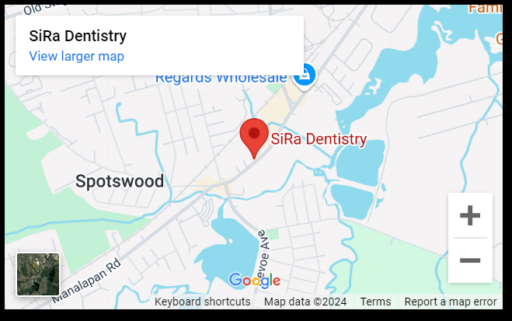
SiRa Dentistry is in Spotswood, NJ. We take time to figure out what’s actually going on, explain it clearly, and give you real options, not just a recommendation for a stronger mouthwash.
Call 732-454-7472 or email [email protected] to schedule. No judgment. Just answers.