You catch yourself doing it again. A photo gets taken, and before anyone sees it, your eyes go straight to your teeth. Maybe it is the crowding on the bottom row that has gotten a little worse over the years. Maybe it is the gap, or the one tooth that turned and never turned back. You are an adult with a job, a calendar, and zero interest in a mouth full of metal, but the thing has been quietly bothering you for a long time.
So you start researching at night. And within twenty minutes you are buried in conflicting numbers, mail-order kits promising a new smile for a few hundred dollars, and a vague sense that you are about to get talked into something. Here is the straight version, no sales pitch. At SiRa Dentistry in Spotswood, we treat a lot of adults who want their teeth straighter without announcing it to the world. Invisalign and clear aligners are usually the tool for that job, but not always, and not for every bite. Below is what it tends to cost, how long it tends to take, and how to tell whether aligners or braces make more sense for your specific situation.
What Invisalign and Clear Aligners Actually Are
Invisalign and clear aligners are a series of custom-made, clear plastic trays that fit over your teeth. Each tray is slightly different from the last, nudging your teeth a fraction of a millimeter at a time. You wear one set for a week or two, then swap to the next in the series. Over months, those small moves add up to a straighter bite.
They are removable. You take them out to eat and to brush, and from a few feet away, most people will not notice you are wearing them. That is the appeal for adults. You can straighten your teeth through a round of meetings and dinners without it being the first thing anyone sees.
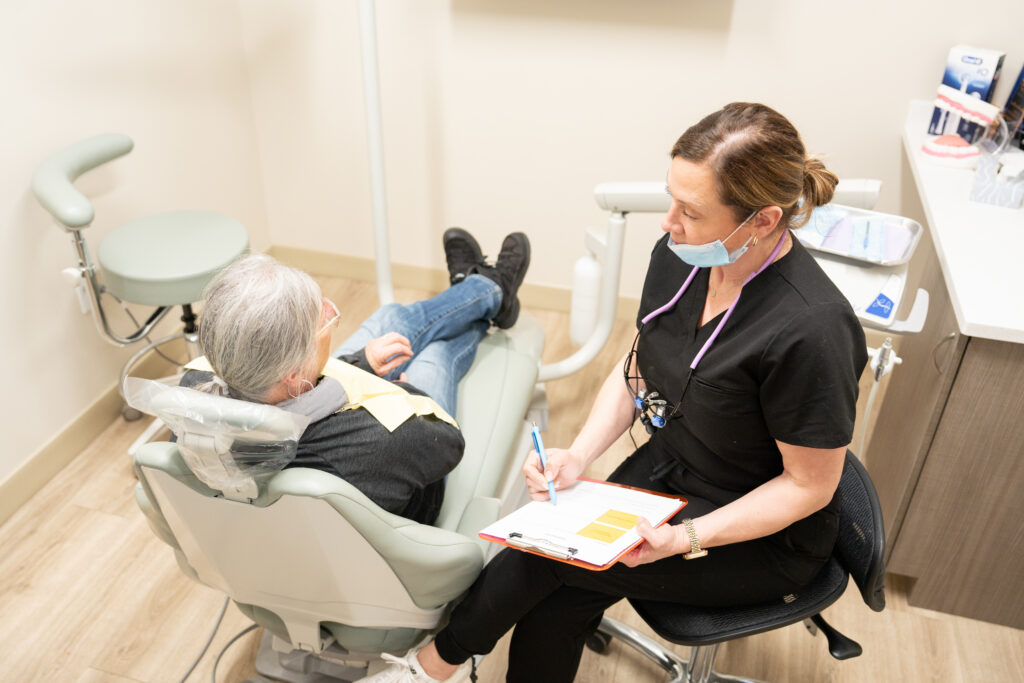
What matters more than the brand name on the tray is who is running the treatment. At SiRa, your aligners are planned and monitored in-office by a dentist who looks at your actual teeth, bite, and gums, not a tray mailed to your door based on a photo you took in your bathroom.
What It Tends to Cost
Let’s talk numbers, because that is what you actually came for. To set expectations, full clear aligner treatment with a dentist generally falls in a national range of roughly $3,500 to $6,500, with simpler touch-up cases coming in lower. That is a general industry range, not SiRa’s pricing. The exact figure depends on how much movement your case needs: a few teeth nudged into line costs less than a full-arch correction.
| Case complexity | What it usually involves | Where it tends to fall |
|---|---|---|
| Minor | Slight crowding, small gaps, minor relapse after old braces | Lower end of the range |
| Moderate | More crowding, mild bite issues, both arches | Middle of the range |
| Comprehensive | Significant crowding, rotations, bite correction | Upper end of the range |
Dental insurance sometimes contributes toward orthodontic treatment, but coverage varies widely from plan to plan, and we will help you read your specific benefits rather than guess. Many adults also use HSA or FSA dollars. For your exact number and to talk through payment options, call (732) 454-7472.
A quick word on the mail-order route. Those at-home kits look cheaper on the sticker. What you are not paying for is a dentist examining your gums and roots before anything moves, and catching problems mid-treatment. Teeth can be moved in ways that damage them when no one is watching the bite. “Cheaper upfront” and “more expensive after something goes wrong” are not the same math.
How Long It Takes
Timeline is the other big question, and the honest answer is: it depends on your case.
- Minor corrections, such as closing a small gap or fixing slight crowding, can finish in as little as 6 months, sometimes a bit less for very small moves.
- Moderate cases typically run 9 to 12 months.
- Comprehensive cases involving bite correction or significant crowding often take 12 to 18 months.
Two things determine whether you land at the short end or the long end. The first is the complexity of your starting point, which you do not control. The second is compliance, which you completely control.
Clear aligners only work when they are in your mouth. The target is 22 hours a day. You take them out to eat and to clean your teeth, and the rest of the time they are on. Patients who treat that as a strong suggestion rather than a rule stretch their timeline and sometimes stall their results. Patients who wear them faithfully tend to finish on schedule. It is one of the few medical-adjacent things where your discipline directly moves the finish line.
Invisalign vs. Traditional Braces: When Each One Wins
Aligners are not automatically the right answer. For some bites, traditional braces still do the job better. Here is an honest side-by-side.
| Factor | Invisalign / Clear Aligners | Traditional Braces |
|---|---|---|
| Appearance | Nearly invisible | Visible brackets and wires |
| Removable | Yes, for eating and cleaning | No, fixed on until done |
| Best for | Mild to moderate crowding, gaps, many bite issues | Complex bites, severe rotations, large movements |
| Eating | No food restrictions | Several foods off-limits |
| Cleaning | Brush and floss normally | More effort around brackets |
| Discipline required | High: you must wear them 22 hrs/day | Lower: they work whether you cooperate or not |
| Office visits | Periodic check-ins | Regular adjustments |
The pattern: clear aligners win on appearance, convenience, and lifestyle, and they handle the majority of adult cases well. Braces still win for certain complex situations: severe rotations, teeth that need to move a long way, or bite problems that need more force than a plastic tray can apply.
This is exactly why an in-person exam matters. We will tell you honestly if your case is one where aligners are the clear choice, or one of the cases where braces would actually serve you better. We would rather point you to the right tool than sell you the convenient one.
Questions to Ask Before You Start Any Aligner Treatment
Whether you are considering us or anyone else, run through these before you commit:
- Will a licensed dentist examine my teeth and gums in person before treatment begins? If the answer is no, walk away.
- Who monitors my progress, and how often? You want eyes on your bite throughout, not just at the start.
- Is my case actually a good fit for aligners, or would braces work better? A straight answer here tells you a lot about whether you are being sold to.
- What is the total cost, and what is included: scans, trays, check-ins, and retainers at the end?
- What happens if a tray does not track or my teeth do not move as planned? There should be a built-in plan for adjustments.
- What does retention look like after treatment? If no one mentions retainers, that is a red flag.
Do Not Skip the Last Step: Retainers
Here is something the cheap kits rarely emphasize. Teeth have memory. Once they are straight, they will drift back toward where they started if nothing holds them. That is not a flaw in the treatment; it is just how teeth behave.
After your aligners finish, you wear a retainer to lock in the result. Usually that means full-time wear for a short stretch, then nights-only ongoing. Skipping retention is the single most common way people undo months of good work. We build this into the plan from the beginning so the smile you paid for is the smile you keep.
Frequently Asked Questions
Does Invisalign hurt?
Most people feel pressure or mild soreness for a day or two each time they switch to a new tray. That is the teeth moving, which is the point. It is typically described as discomfort, not pain, and it fades as you adjust to each set.
Can I get Invisalign if I had braces as a teenager?
Often, yes. A lot of adult aligner cases are people whose teeth shifted years after braces, usually because they stopped wearing their retainer. Clear aligners are frequently a good fit for that kind of relapse, and an exam will confirm it.
How is treatment with a dentist different from a mail-order kit?
A dentist examines your gums, roots, and bite in person before anything moves, then monitors progress and adjusts as needed. Mail-order kits skip that oversight. Moving teeth without a professional watching the bite can create problems that cost far more to fix than the kit ever saved.
Will my insurance cover it?
It might contribute. Many dental plans include some orthodontic benefit, but coverage varies significantly between plans. We will review your specific benefits with you and can apply HSA or FSA funds to make it manageable.
How do I know if I am a candidate?
The only reliable way is an in-person consultation. We will look at your teeth, talk through your goals, and tell you honestly whether clear aligners, braces, or another approach makes the most sense for your case.
Ready to Find Out What Straightening Your Teeth Would Involve?
The real cost, the real timeline, and the right method for your bite all start with one conversation. Call (732) 454-7472 or book your consultation online. We welcome adults from Spotswood, East Brunswick, Monroe Township, Old Bridge, and communities across Middlesex County and Central Jersey.