A sip of ice water should not be a hazard.
Neither should a bite of ice cream, a square of dark chocolate, or the first breath of cold air on a winter walk. But for a lot of people, those small everyday things deliver a sharp, electric zing that comes out of nowhere and ruins what should have been a pleasant moment.
If you have been swapping cold drinks for room-temperature ones, chewing on one side, or quietly bracing for the sting before dessert, you are not imagining it. And switching to a “sensitive teeth” toothpaste is rarely the full answer.
Here are five real causes of tooth sensitivity, in roughly the order we see them most often, and what each one may mean.
1. Gum recession exposing the root surface
This is one of the most common causes we see, and one most patients do not realize is happening.
The crowns of your teeth, the part above the gumline, are covered in enamel, the hardest substance in the body. The roots below the gumline are not. They are covered in a much softer tissue called cementum, and just beneath that sits dentin, which contains thousands of microscopic tubules that connect toward the nerve.
When the gums recede, even slightly, those root surfaces get exposed. Cold air, cold liquid, and sweet foods can travel through those tubules and stimulate the nerve. The result is the sharp, fleeting zing most people describe.
Recession happens slowly. You usually do not notice it in the mirror. What you notice is that one tooth, or one section of your mouth, suddenly reacts to things that never used to bother you.
2. Enamel erosion from acid
Enamel is hard, but it is not invincible.
Acidic foods and drinks can slowly dissolve it. Citrus, soda (including diet soda), sports drinks, wine, kombucha, and frequent coffee all contribute. So can undiagnosed acid reflux, which bathes the back surfaces of the upper teeth in stomach acid, often at night, without the classic burning sensation.
As enamel thins, the dentin underneath gets closer to the surface. Cold and sweet start to register more strongly. The sensitivity is often general rather than tooth-specific, and it tends to creep in gradually over months or years.
Part of the approach is behavioral. Rinsing with water after acidic drinks, waiting before brushing after them, and using a straw can all help. The damage already done is something we look at and address directly during an exam.
3. Aggressive brushing
Most people who brush hard think they are doing a good job.
They may be doing the opposite. Hard bristles and a scrubbing, side-to-side motion can wear down enamel at the gumline and physically push the gums back, which combines two of the worst sensitivity triggers into one habit.
If you can see notches near the gumline of your teeth, or if your gums look like they have pulled away in specific spots and not others, the way you brush is worth looking at. A soft-bristled brush, light pressure, and a circular or gentle back-and-forth motion is often better than a hard scrub.
This is one of the easier things to change, and the benefit often shows up faster than people expect.
4. A cracked tooth or hairline fracture
This one feels different, and it is worth knowing the signature.
Cracked-tooth sensitivity is usually sharp, sudden, and localized to a single tooth. Cold sets it off much of the time. Sometimes biting down does too, especially when you release the bite. The pain is brief but unmistakable, and it can come and go for weeks before getting worse.
Cracks can be hairline-thin and invisible to the naked eye. They often hide on back teeth that take the most chewing force, especially in people who clench or grind at night. We use magnification, dye tests, and a bite stick during the exam to look for them.
A cracked tooth does not heal on its own. Caught early, the fix is often straightforward. Left alone, the crack tends to spread, and the options narrow. If one specific tooth is reacting and the others are not, please do not wait it out.
5. An old filling that has shifted or started to leak
Fillings do not last forever.
Over years of chewing, temperature changes, and normal wear, the seal between a filling and the surrounding tooth can break down. A microscopic gap opens up. Saliva, food particles, and bacteria work their way underneath, and the tooth becomes sensitive to cold, sweet, or sometimes pressure.
You will not see this from the outside. The filling can look completely fine in the mirror. But the tooth tells you something is off. Patients often describe it as “this one tooth that did not used to do this.”
This is one of the more common reasons a previously quiet tooth suddenly starts acting up. An exam, an X-ray, and sometimes a closer look with magnification is how we figure out whether the filling needs to be replaced or whether something deeper is going on.
What to do if this is you
If cold or sweet is making you flinch on a regular basis, the first step is figuring out which of these is actually causing it. Most patients have a guess. The guess is sometimes right and often partly right, but the specific cause matters because each one has a different approach.
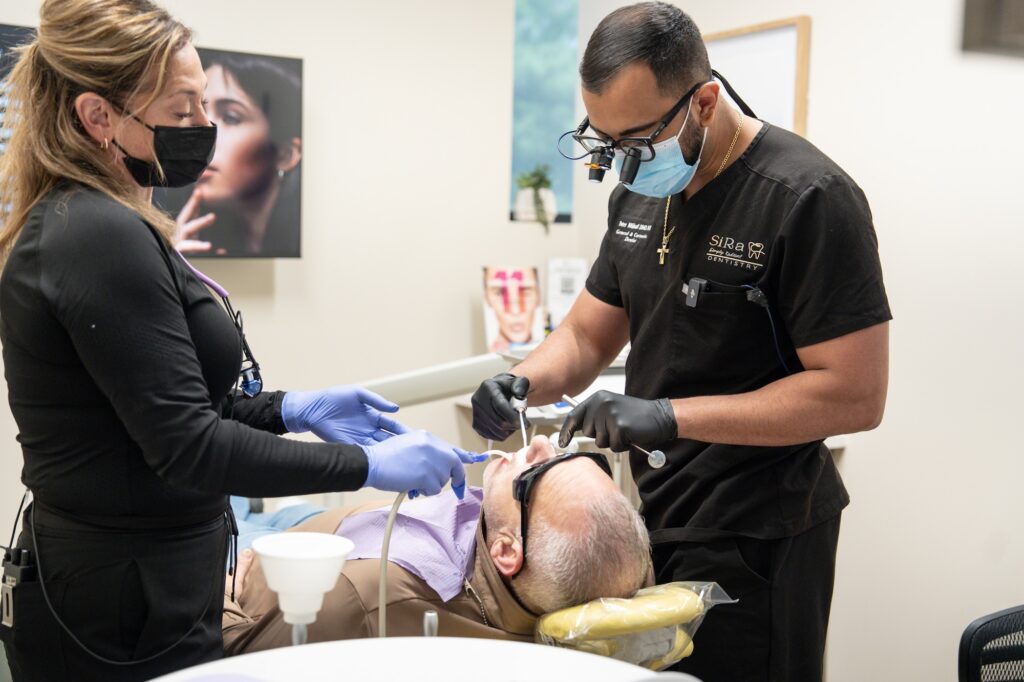
At SiRa Dentistry, an exam for sensitivity is straightforward. We look at your gums, check for recession and signs of wear, examine each tooth that has been bothering you, and take X-rays if we need to see what is happening below the surface. If we suspect a crack, we test for it. If we suspect a leaking filling, we look closely at the margins.
You leave knowing what is going on and what your options are. Some sensitivity is managed with simple changes at home. Some needs a small repair. Some is a signal that something bigger is starting, and catching it now can be the difference between a small fix and a larger one.
Frequently Asked Questions
Will a sensitivity toothpaste solve this?
Sometimes, partially. Sensitivity-formula toothpastes work by blocking the tubules in exposed dentin, and they can take the edge off mild cases. They do not fix recession, cracks, leaking fillings, or enamel erosion. If you have been using one for a month and it is not helping, the cause may be structural and worth examining.
Is it normal for teeth to get more sensitive as you age?
Some change is common, but ongoing or worsening sensitivity is not something to ignore. Recession, wear, and old dental work can catch up with people over time, and the earlier you address the cause, the more options you tend to have.
What if only one tooth is sensitive?
That often points to something specific: a crack, a failing filling, decay, or a single area of recession. One-tooth sensitivity is worth getting looked at sooner rather than later, because the cause is often something that gets worse if it sits.
Can recent whitening make teeth sensitive?
It can, and it is usually temporary. Whitening treatments can cause short-term sensitivity that fades within a few days to a couple of weeks. If sensitivity from whitening lasts longer than that or feels more intense than expected, mention it at your next visit.
Is grinding my teeth at night making this worse?
It can. Clenching and grinding wear down enamel, can contribute to hairline cracks, and put steady pressure on the gumline. A lot of people do not know they grind until someone points out the signs. We check for those signs during the exam, and a night guard can often make a meaningful difference.
Something we can actually help with
Living around your teeth, avoiding the cold side of the menu, chewing on one side, bracing yourself before the first bite, that is not something you have to keep doing.
SiRa Dentistry is in Spotswood, NJ. We take the time to figure out what is causing the sensitivity, explain it in plain language, and walk you through your options instead of handing you a generic recommendation.
Call (732) 454-7472 or book your appointment online. Serving Spotswood and the surrounding Central Jersey area.