A lot of people wake up with a headache and blame the pillow.
Or they notice their jaw is sore in the morning and figure they slept funny. Or they feel a dull tension behind their eyes on high-stress days and reach for the ibuprofen.
Sometimes those things are exactly what they seem.
But sometimes, your mouth is the actual source of the problem, and your dentist is the one who can spot it.
Here’s what we look for.
What is “stress smiling” doing to your teeth?
Stress doesn’t just live in your shoulders and your chest. For a lot of people, it lives in their jaw.
When you’re tense, anxious, or overwhelmed, your body often holds that tension in your face. You clench your back teeth. You grind while you sleep. You brace your jaw during the day without realizing it.
Dentists call this bruxism when it happens unconsciously. And it’s more common than most people realize, especially right now, and especially in people who would describe themselves as “stressed but functional.”
The frustrating part is that bruxism is sneaky. It happens at night, when you can’t feel it. It builds slowly. And most people don’t notice it until something starts to hurt or break.
Signs we look for at your dental exam
When a patient comes in for a routine visit, we’re not just looking at cavities. We’re looking at the whole picture. And some of the most telling signs of jaw stress show up quietly.
Here’s what tends to flag it for us:
Worn-down tooth surfaces. The biting edges of your front teeth and the flat surfaces of your back teeth should have a natural contour. When someone is grinding, those surfaces start to flatten. Sometimes we see it gradually over visits. Sometimes a new patient comes in and the wear pattern is obvious right away.
Cracks and chips that don’t match any injury. If you crack a tooth eating something soft, or chip a tooth without any real trauma, that’s often a grinding pattern, not bad luck.
Tooth sensitivity that comes and goes. Grinding wears down enamel. Thinner enamel means nerves are closer to the surface. Cold drinks, hot coffee, a bite of something sweet, and suddenly a tooth reacts that never used to bother you.
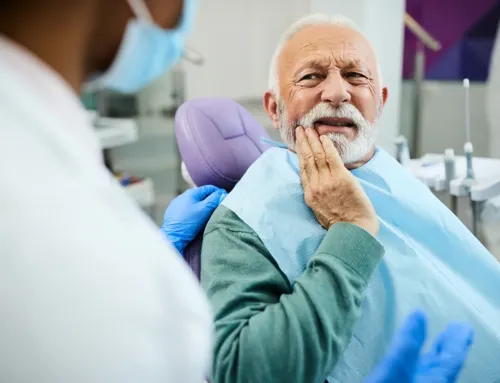
Jaw tenderness or tightness. We’ll sometimes gently press around the jaw joint and ask if certain spots are tender. A lot of patients are surprised to find that they are.
Headaches that start at the temples. The muscles you use to clench your jaw connect up toward your temples. When those muscles are overworked night after night, they get inflamed and tired. That inflammation can radiate as a headache, especially in the morning before you’ve even gotten out of bed.
A jaw that clicks or pops. This can be a sign that the joint is under strain. Not always, and not every click means something serious. But it’s worth noting and tracking.
Why it matters more than just discomfort
A lot of people live with these symptoms for years and just manage around them.
They avoid hard foods. They take pain medication more often than they’d like. They chalk the headaches up to stress or screen time or not sleeping well. None of that is wrong, exactly. But it misses the source.
Left unchecked, grinding can:
- Wear teeth down to the point where they need crowns or more significant restoration
- Crack teeth below the gumline, which can lead to extraction
- Damage existing dental work like veneers, crowns, or implants
- Create ongoing jaw joint problems (TMJ/TMD) that are harder to treat once they’re established
- Cause permanent sensitivity in otherwise healthy teeth
The earlier we catch it, the simpler the solutions tend to be. Catching it early usually means a protective nightguard. Catching it late sometimes means rebuilding.
What we can do about it
The first step is understanding what’s actually going on. Not every headache is jaw-related. Not every crack is from grinding. We don’t jump to conclusions.
We look at your full bite, the wear patterns on your teeth, how your jaw joint moves, and where you’re holding tension. We ask about your sleep, your stress level, and whether you notice any daytime clenching.
If grinding or clenching is part of the picture, we’ll talk about options:
A custom nightguard is the most common starting point. This is a custom-fitted appliance that creates a barrier between your upper and lower teeth while you sleep. It doesn’t stop you from grinding, but it redirects the force so your teeth and jaw absorb less of it. Most patients sleep better with one once they adjust, and many notice the morning headaches improve.
Bite adjustment may be part of the picture if your teeth aren’t coming together the way they should, putting extra strain on certain spots.
Restorative work if there are existing cracks or damage that need to be addressed.
And sometimes the conversation is just: here’s what we’re seeing, here’s what to watch, let’s check this in six months. We’re not going to push treatment you don’t need.
FAQs
Can stress really cause dental problems?
Yes. Jaw clenching and grinding are the most direct connection, but stress also affects gum health and immune response. The mouth and the rest of the body are not separate systems.
I don’t think I grind my teeth. How would I know?
Most people who grind do it during sleep and have no idea. Your dentist can see the signs in your teeth and jaw even when you can’t feel it. If you wake up with a stiff jaw or a dull headache more than occasionally, it’s worth mentioning at your next visit.
Do I really need a nightguard, or will this go away on its own?
The grinding habit rarely goes away on its own, especially if the underlying stress is ongoing. The damage it causes is cumulative. A nightguard protects what you have while we figure out what’s driving it.
Are nightguards uncomfortable?
There’s an adjustment period, usually a week or two. After that, most patients don’t notice it. Custom-fitted guards are much more comfortable than the over-the-counter options you’ll find at the drugstore.
Can kids have bruxism?
Yes. It’s actually fairly common in children, often related to developmental changes or stress. If you notice your child grinding or hear it at night, mention it at their next visit.
Not sure if what you’re feeling is jaw-related?
You don’t have to figure it out on your own.
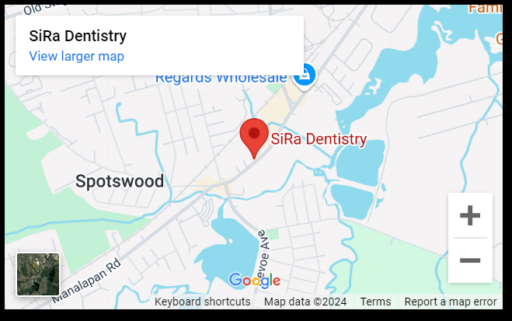
At SiRa Dentistry in Spotswood, NJ, we take time to actually look at what’s going on and explain what we find in plain language. No jargon, no pressure, no bill you didn’t see coming.
If you’ve been waking up with jaw pain or headaches and haven’t said anything about it at a dental visit, bring it up. It takes about two minutes to check, and it might explain a lot.
Call 732-454-7472 or email [email protected] to schedule.